

lookie hiar, a KIRFy htc macgic complete with mouse! 
lookie hiar, a KIRFy htc macgic complete with mouse!
There was once a Japanese Dragon Ball cel gallery on the internet that was truly stunning. The man who ran it had some of the most rare and incredible cels from the most pivotal and memorable scenes from throughout the entire series. Including the original Dragon Ball and GT. In a case of misunderstanding, he translated an american forum who were in awe of his cels and thought that they were talking poorly of him. He became offended and made a single post on the forum saying how he felt. Of course, none of the collectors actually meant any harm, but these pages don’t translate perfectly when using an online translator like Babel Fish. I am not sure if this led to the shutting down of his gallery or not, but a few months after the incident it disappeared off the internet. It could have been a mixture of that and him getting offers for the cels even though he had no intention of selling them. Well, luckily I happened to save a lot of the images from the site before it disappeared. I don’t know of anyone else having them so I thought I’d share. I’ll post some more of them in the coming days. But by no means is this all of them. Unfortunately, I don’t have even a fraction of what was on that site. The man literally had some of the best I have ever seen. Including SSJ2 Gohan doing the One-Handed KameHameHa with his father against Perfect Cell. Yeah. Really. So, below are a few of the amazing cels that were in what was, in my opinion, the best Dragon Ball Cel Gallery on the internet. But do not worry. As Yoda might say, “There is another.”
I don’t have all of the images, so if anyone out there has some more from this gallery they’d like to share please contact me! Go to the About section for information on how to do that. I’d love to see some of the other ones again! There’s more to come so stay tuned! Click the images below to see them larger!

Goku stopping Vegeta as he sense Buu's power!

Letting Babidi transform him into Majin Vegeta.

Cyborg 17 swipes the controller from Dr. Gero

Probably the best SSJ Gohan cel ever from Movie 10.

SSJ2 Gohan is coming for Cell!

This was the site's title card.

According to a post over at neowin, the Nexus one will make be released on March 25th. It is believed that Verizon will officially announce the Nexus at CTIA in Las Vegas next month. Pricing should be within range of the current T-Mobile pricing for the Nexus, but it is unclear whether Google will handle the sales or would Verizon stock the phone directly.
via Nexus One Blog
source Neowin
via Engadget:
Apparently, men not only like robots, they they prefer Android (the OS) as well:

Considering how skewed toward men technology was just half a generation ago, it’s fairly startling how evenly the mobile device user base is split between men and women…with the notable exception of Android, where 3 out of 4 users are men.
No explanation was given for the discrepancy, but my money would be on the hacker ethos surrounding the marquee Android phone–the Motorola Droid playing a big role in the split–combined with the hard lines and aggressively male styling that’s become endemic on the Motorola offerings:

Engadget also notes the interesting age breakdown mobile devices, with particular emphasis of the youthfulness of iPod Touch users:

As a dad, this one’s easy to explain: I’d give an iPod Touch to my music-obsessed kid whom I don’t want chatting away and racking up a crazy expensive phone bill every month. Once they can pay their own AT&T bill, I’d have no problem recommending the iPhone in its place 
Read the whole thing here:
http://www.engadget.com/2010/02/26/survey-says-android-users-mostly-male-webos-not-just-for-women/
AsyncTask class is very handy to execute one-time operations in the threads separate from main UI thread and communicate results back to it. However I figured out that AsyncTask must be used with caution as it’s behavior may unexpectedly change after invocation of some of its methods.
Scenario #1: Methods onProgressUpdate() and onPostExecute() are not called as expected
Expected behavior: AsyncTask class methods onPostExecute() and onProgressUpdate() are called during and after task execution. E.g. method onProgressUpdate() is invoked in the main UI thread whenever publishProgress() is called inside doInBackground() worker method; Method onProgressUpdate() is invoked in the main UI thread upon doInBackground() method completion;
Problem synopsis: Neither onPostExecute() nor onProgressUpdate() are not called at all or called all at once after completion of the task
Solution: This is happened when after starting AsyncTask execution one of the following methods was called: AsyncTask.get() or AsyncTask.getStatus(). Similar situation occurs when AsyncTask is executed by JUnit test cases based on Android Testing Framework.
Currently I don’t have explanation why its happens and how to solve this, but I’m still researching it. At least I know what to do for preventing the issue.
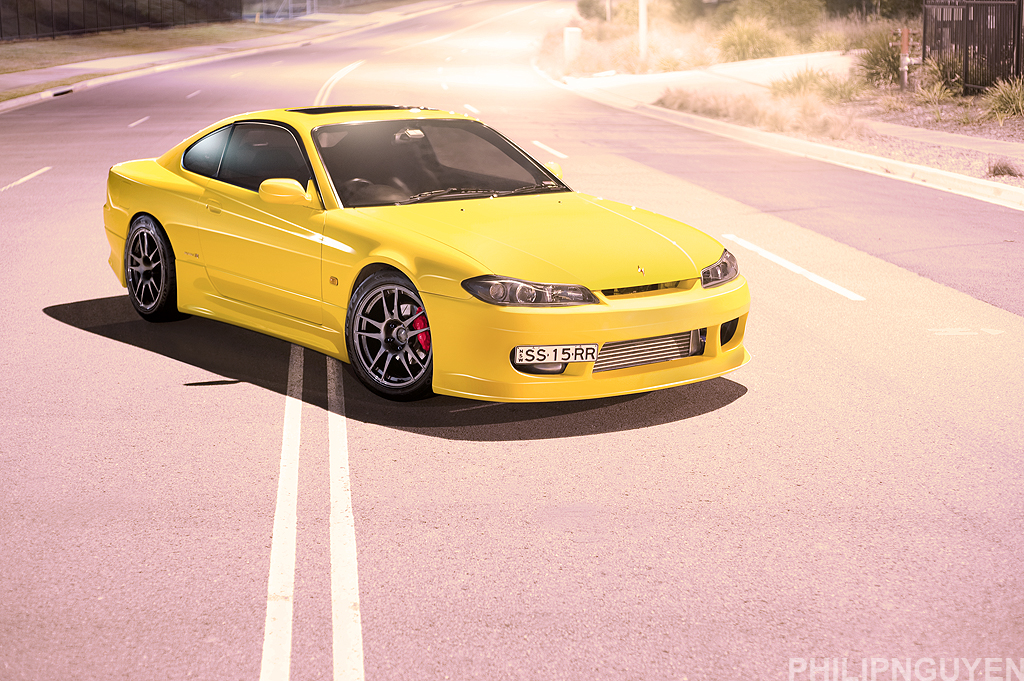
I love this car, so clean and simple.
It’s too bad North America never got these because they always look amazing.




Last year, Apple’s iPhone nearly doubled its worldwide market share of smartphone sales to 14.4 percent, up 6.2 points from the year before, according to the latest market share figures put out by Gartner. The iPhone still trails behind Nokia’s Symbian-powered smartphones (No. 1), which saw their share decline 5.5 points to 46.9 percent, and RIM Blackberries (No. 2), which gained 3.3 points to end the year with a 19.9 percent share.
Remember, these are worldwide estimates. In the U.S., both Blackberry and Apple are much larger than Symbian. And when it comes to mobile Web traffic, Apple and Android dominate with 81 percent share. According to Gartner, Android phone sales jumped 3.4 points (to 3.9 percent), but Android is still smaller than WIndows Mobile or Linux. Those mobile OSes, however, saw their market share drop 3.1 and 2.9 percent, respectively. Palm’s WebOS barely made a mark with 0.7 percent share.
So when you tally everything up, Symbian lost the most share (5.5 percent), followed by Windows Mobile and Linux. The iPhone saw the biggest gain (6.2 percent), compared to smaller but roughly equal jumps by Blackberry and Android (up 3.3 and 3.4 percent, respectively).
All together, Gartner estimates 172 million smartphones were sold last year, up 24 percent. In contrast, total mobile phone sales were flat at 1.2 billion. Smartphones represented 14 percent of total mobile handset sales last year, up from 11 percent in 2008. The iPhone, for all of its growth, made up only 2 percent of all mobile phone sales last year. Below are the marjet share tables from Gartner:
Table 2
Worldwide Smartphone Sales to End Users by Operating System in 2009 (Thousands of Units)
Source: Gartner (February 2010)
Table 1
Worldwide Mobile Terminal Sales to End Users in 2009 (Thousands of Units)
Note* This table includes iDEN shipments, but excludes ODM to OEM shipments.
Source: Gartner (February 2010)
Terus Berinovasi Berikan Solusi Telekomunikasi:
Indosat Luncurkan Layanan Berbasis Android Pertama di Indonesia

ANDROID dari INDOSAT – Indosat menjadi operator pertama di Indonesia yang meluncurkan layanan berbasis Android melalui berbagai paket layanan dengan menggandeng 6 Agen Tunggal Pemegang Merek (ATPM) terkemuka. Selain itu Indosat juga meluncurkan aplikasi – aplikasi berbasis Android melalui Android Aplication Store. Indosat memiliki komitmen kuat untuk kembangkan layanan berbasis Android di Indonesia. Tampak dalam gambar Guntur S. Siboro, Chief Marketing Officer Indosat (tengah), bersama dengan perwakilan 6 ATPM saat peluncuran layanan ini di depan media di Jakarta.
Jakarta, 22 Februari 2010 – Layanan berbasis Android saat ini tengah ditunggu-tunggu kehadirannya di Indonesia, menyusul telah diperkenalkannya handphone atau handset Android oleh beberapa produsen. Indosat sebagai operator telekomunikasi yang selalu berupaya mengedepankan inovasi memenuhi harapan masyarakat tersebut dengan meluncurkan layanan berbasis Android yang menyediakan berbagai paket layanan dengan menggandeng 6 Agen Tunggal Pemegang Merek (ATPM) terkemuka. Selain itu Indosat juga meluncurkan aplikasi – aplikasi berbasis Android melalui Android Aplication Store.
“Indosat memiliki komitmen yang kuat untuk mengembangkan layanan berbasis Android di Indonesia, dengan inisiatif pertama berupa paket layanan bersama dengan 6 ATPM serta menghadirkan Android Aplication Store. Tidak hanya itu, ke depan kami juga telah mempersiapkan program-program untuk mengembangkan layanan berbasis Android ini sehingga benar-benar dapat memberikan manfaat lebih bagi pelanggan dan masyarakat Indonesia pada umumnya,” demikian disampaikan Guntur S. Siboro, Chief Marketing Officer Indosat.
Android sendiri merupakan sistem operasi bergerak (mobile) yang menggunakan versi modifikasi dari kernel Linux. Android memiliki berbagai keunggulan sebagai software berbasis kode komputer yang bisa didistribusikan secara terbuka (open source) sehingga programmer bisa membuat aplikasi baru di dalamnya.
Selain itu Android memiliki aplikasi native Google yang terintegrasi, seperti push email GMail, Google Maps, dan Google Calendar. Pada awalnya, Android dikembangkan oleh Android Inc, sebuah perusahaan yang kemudian dibeli oleh Google dan akhir-akhir ini dikembangkan oleh Open Handset Alliance.
Untuk menunjang layanan aplikasi Android, Indosat menggandeng beberapa ATPM yang menyediakan handset Android sehingga pelanggan memiliki berbagai alternatif pilihan. ATPM itu di antaranya HTC dengan HTC Hero, Motorola dengan Motorola Milestone, Samsung dengan Samsung Galaxy Spica, LG dengan LG GW 620, Huawei dengan U8230 serta Sony Ericsson dengan Xperia X10.
Adapun Android Application Store adalah “toko virtual” yang menyediakan ribuan aplikasi baik yang gratis maupun berbayar. Indosat menghadirkan Android Application Store sebagai bentuk keseriusan dalam memberikan layanan yang terintegrasi di satu tempat yang dapat menampung kebutuhan pelanggan terkait aplikasi dan layanan Android dari Indosat.
Semua paket layanan tersebut akan dihadirkan di Indosat Android Expo pada Pameran Mega Bazaar di JCC 3-7 Maret 2010 Dapatkan harga Handset Android dengan diskon yang sangat menarik dari enam ATPM yang bekerja sama dengan Indosat dan pre-order sudah bisa dilakukan mulai tgl. 22 feb – 28 feb 2010 di www.Indosat.com/android.
Paket lainnya adalah program khusus antara lain 2000 Nomor Postpaid Matrix Broadband Unlimited secara gratis dengan kode akses 0814-xxx-xxxx (hanya tersedia selama expo). Paket Prepaid Broadband yaitu akses Broadband dengan menggunakan kartu IM3/Mentari dengan cara dial ke *777*1*5# serta Paket Prepaid Broadband IM2 (mulai tanggal 25 Februari 2010) dimana Pelanggan IM3/Mentari juga bisa menggunakan paket Broadband IM2 serta tentunya handset Android dengan harga spesial.
”Indosat akan terus memberikan inovasi-inovasi lainnya sebagai komitmen kami untuk terus memberikan alternatif solusi dalam mendukung aktivitas berkomunikasi mobile pelanggan kapanpun dan dimanapun, yang antara lain dibuktikan melalui peluncuran layanan berbasis Android ini”, ujar Guntur S. Siboro mengakhiri penjelasannya.
Tentang Indosat
Indosat adalah penyelenggara telekomunikasi dan informasi terkemuka di Indonesia yang memberikan layanan jasa selular (Mentari, Matrix dan IM3), jasa telekomunikasi tetap atau jasa suara tetap (seperti jasa SLI yaitu SLI 001, SLI 008 dan FlatCall 01016, jasa fixed wireless yaitu StarOne dan Indosat Phone). Indosat juga penyelenggara jasa data tetap (MIDI) bersama-sama dengan anak perusahaannya yaitu, Indosat Mega Media (IM2) dan Lintasarta. Indosat juga menyediakan layanan seluler 3.5 G dengan teknologi HSPA. Saham Indosat tercatat di Bursa Efek Indonesia (IDX:ISAT) dan saham dalam bentuk American Depositary Shares tercatat di Bursa Efek New York (NYSE:IIT).
Untuk keterangan lebih lanjut hubungi :
Corporate Communications
Telp : 62-21-3869614
Fax : 62-21-30003754
E-mail : publicrelations@indosat.com
Website : www.indosat.com
It’s always it-the all famous “Hello World” to demonstrate and assure one of the thought that things can be achieved with this programming language or platform as in this case-Android.
So, let’s just get on with it:
Create a project based on what you are using-IDE or console. IDE is considered as the preferred mode for the development process as it saves you a lot of time. So,here it will be explained considering you are using IDE-preferrebly ECLIPSE.
for ECLIPSE: click ‘File’ -> ‘New’ -> android project.
fill in the details of the project as:

This will create new project in your project directory.
Whenever a project is created in android, weather through an IDE or console, what android does is to create “Hello World” project and then we have to rebuild on it, which is very easy as you will see in the long run. Things that are created inside a new project are:-
1. Layout-main.xml
2. Activity- a Java class with name of the activity provide when making a project. In this case-HelloWorld.java
3. AndroidManifest.xml file for describing the project.
4. Resources-in this case a strings.xml file
5. Other necessary things.
Now, lets take it one by one:
main.xml:
It’s the main layout file describing the things that should be seen on the screen. There are two things are described there:
A Layout: LinearLayout to describe how the things should be arranged on the screen.
and a TextView for the displaying the text-”Hello World, Hello World”.
This is the basic layout of the file but it can be changed, which will likely be always as one advances further.
Acivity-HelloWorld.java:
This is where all the action happens. Whenever this application is launched this is the class that will be called first.

As you can see there are not much happening in there right now but hey, it just getting started isn’t it.
First line is the package name. And then there are a few imports. After that there is the class declaration.Here there is one thing to note that it extends Activity class, which is predefined in android.
Activity represents the screen which we see when we are interacting with the application.Here it just sets the screen according to the content of the main.xml layout which we have already discussed above.
And wallah!! Here is the end result to you as seen in the emulator:

By Gigacom.com
Sprint will launch its fist WiMAX-enabled handset in the first half of this year, several months earlier than expected, according to a Forbes story this morning — an HTC Supersonic, a dual-mode, Android-enabled device that boasts a 4.3-inch LCD display and Wi-Fi connectivity. But does Sprint really need a WiMAX phone yet?
The phone will reportedly switch automatically switch between Sprint’s 3G EV-DO network and the 4G infrastructure it’s building with Clearwire, enabling it to take advantage of average download speeds of 3-6 Mbps. But that’s only when it can find a WiMAX network, which covers some 10 percent of the U.S. population and doesn’t yet include cities such as New York, San Francisco and Washington.
Just as importantly, the industry has yet to agree on a handover for voice between 3G and WiMAX which — like LTE — is all-IP. Depending on how Sprint decides to handle voice on its WiMAX network, folks making a call on its WiMAX phone could find themselves unable to use the 4G data services while on a call. Sprint will obviously need to produce phones that leverage WiMAX as it builds out its new footprint and as the industry addresses the technical problems involved in moving to 4G from 3G. But rushing a WiMAX phone to market in the next few months doesn’t seem to make much sense.
Key Features:
* Android OS
* Mobile email and IM
* Access to Android Market, which features thousands of available applications
* Pre-loaded applications include AT&T Maps, AT&T Music, Gmail, GoogleTalk, Google Maps and more
* MOTOBLUR™ synchronized contacts
* Customized news and social networking feeds
Specifications:
* Chipset: Qualcomm MSM 7200A
* Bands/Modes: WCDMA 850/1900/2100, GSM
850/900/1800/1900
* HSDPA 7.2 Mbps (Category 7/8), EDGE Class 12, aGPS
* Display: 3.1″ HVGA 256k TFT
* Battery: 1400mAH
* Messaging: MMS, SMS, IM, POP3/IMAP4, Consumer/
Corporate Email
* Audio: AAC, AAC+, Enhanced AAC+, MIDI, MP3, WAV
* Video: Capture/Streaming, H.263, H.264, MPEG4
* Camera: 5 MP, Auto Focus, LED
* Memory: 512 NAND, 256 MB RAM, 2 GB inbox,
microSD™ (supports up to 32 GB)
* Connectivity: 3.5mm, USB 2.0 HS, BT Class 2 Version 2.0
* Browser: Android Webkit/HTML
* Wi-Fi 802.11 b/g
* Accelerometer, E-Compass
AT&T Announces Availability of First Device on Android Platform with Motorola
HSPA 7.2 – Capable Motorola BACKFLIP Coming Soon to AT&T Stores Nationwide

Reserve Yours Today!
MOTOBLUR offers AT&T customers a new way to connect to their favorite people, content and applications, whether it’s work or personal email, messaging or social networking. Motorola’s exclusive Android™ experience syncs contacts, posts, messages, photos and much more — from sources such as Facebook, MySpace, Twitter, Gmail, Picasa, work and personal e-mail, and Last.fm — and automatically delivers them to live widgets for immediate reply, right from the home screen. And, for customers who prefer multi-tasking, AT&T’s 3G network offers the added advantage of talking and surfing the Web and accessing applications at the same time.
BACKFLIP features a unique form-factor with an original reverse flip design, spacious keyboard and BACKTRACK™ touch panel, allowing the display to be hands-free while one’s fingers work behind the screen. BACKFLIP runs on the nation’s fastest 3G network and is powered by MOTOBLUR™, Motorola’s Android-powered content delivery service created to make phones more personal and socially smart. Customers can see photos and learn more at www.att.com/backflip.
“Motorola BACKFLIP brings together the best of social networking with the nation’s fastest 3G network,” said David Christopher, chief marketing officer, AT&T Mobility and Consumer Markets. “With the ability to ride on our newest and fastest 3G network, access to more than 20,000 AT&T Wi-Fi hotspots, and the ability to talk and surf at the same time, BACKFLIP boasts a better Android experience.”
MOTOBLUR™
MOTOBLUR keeps track of contacts so it’s easy to keep up. Users can flip through messages and updates on the BACKFLIP and respond in a flash, without having to log in and out of applications. MOTOBLUR helps consumers keep a pulse on what’s happening on their social and news networks. Only MOTOBLUR can sync Facebook, MySpace and Twitter with phone book and email contacts, while threading status updates and profile pics through calls, messages and address book. From the home screen, consumers can update their status to Facebook, MySpace and Twitter at once.
Finally, MOTOBLUR provides users with simplicity and peace of mind, as lost devices can be located from a secure personal information portal and GPS can be used to locate them. One user name and password brings back a user’s contacts, messages and connectivity to previously configured networks and email providers.
”Motorola is proud to bring the first Android-powered device to AT&T’s 3G network,” said Mark Shockley, senior vice president, Motorola Mobile Devices. “AT&T customers will love the social media advantages MOTOBLUR offers as well as the innovative hardware design.”
BACKFLIP is the first Motorola device to feature the new and unique BACKTRACK™ feature which gives AT&T customers the ability to navigate quickly and easily through Web sites, menus and more with a touch panel located behind the screen when the device is folded open. BACKTRACK offers a new way to scroll through the Web, texts, e-mails and news feeds without obscuring the home screen. Flip the keyboard backwards into table-top mode to listen to music, watch videos, view pictures with the digital picture frame or to turn BACKFLIP into a digital, bedside alarm clock.
BACKFLIP comes with a full HTML browser that can be viewed on the 3.1” high-res, touch screen display and makes use of 7.2 HSPA 3G technology on the nation’s fastest 3G network. Android Market™ has access to more than 20,000 apps and widgets, in order to customize the device to fit each consumer’s personal style. Customers can easily shoot photos and video with the BACKFLIP’s 5 MP camera and flash, and upload them to their favorite photo sharing or social media site.
The Motorola BACKFLIP features Wi-Fi connectivity and AT&T customers receive AT&T Wi-Fi access at U.S. hotspots included as part of their unlimited data plan. AT&T’s has the nation’s largest Wi-Fi network with more than 20,000 U.S. hotspots.
Pricing and Availability
The Motorola BACKFLIP will be available March 7 at Cartronix for $99.99 after $100 mail-in rebate. (Pay $199.99 and after mail-in rebate receive $100 AT&T Promotion Card. Two-year agreement and smartphone data plan required.)
Give us a call today or stop by to reserve your new Backflip !
 I’ve been waiting to see how much “hackery” would ensue on the Google Nexus One (s goog) and today I got an eyeful. Yup, efforts are underway to get the HTC Sense UI on the Nexus One. Paul O’Brien, the mastermind at Modaco, is making good headway using a ROM built for the HTC Desire. That makes “sense”, since the Desire is a slightly evolved Nexus One. While I never expected to put a non-carrier ROM on my handset, I may just make an exception for this one. Aside from HTC Sense, there’s some other desirable goodies in the build:
To be honest, I can live without Flash — I have for years, so obviously, I can continue to do so. But I’ve found that it’s a nice to have feature on the evaluation Nokia N900 every now and again for watching video. YouTube vids are generally a non-issue these days, but other players require Flash support. Our own site videos fall into that category — although we were just chatting internally about future video and support for handhelds today: stay tuned.
The Sense UI itself is really what I’m interested in, and that’s mainly because I’ve never used it for more than a few minutes. I’d like to run with it for a week or so, just to see if it’s a “must have” for the way I use my handset. For now, I’m in a wait-and-see mode while Paul continues to work his magic.
However, I did grab a little bit of sense today: I added the HTC Sense keyboard to my Nexus One. It was actually a pretty simple process as outlined at XDA-Developers. I downloaded two .APK files, unzipped them to the SD card on my Nexus One and installed them. As far as installation goes, you can always use the ADB utility in the Android SDK, but I found what might be a faster, easier way. Just search the Android Market for AppsInstaller, which is a free utility and install it. AppsInstaller scans your SD card and allows you to install any applications on the card. The process took me under five minutes and I’m now typing far faster. The keyboard comes with a touch calibration utility, which I ran through one time and the keyboard experience is much more like the iPhone (s aapl), which worked well for me.I’m already finding it faster than the native Android keyboard and even faster than Swype. And there’s still a dedicated key for voice-to-text input, so it’s a win all around.
Images courtesy of DroidDog
Related research on GigaOM Pro (sub req’d):
Google’s Mobile Strategy: Understanding the Nexus One
Third app to publish is another widget and client for one of my favorites sites: givesmehope.com.
Be inspired from the kind and heartwarming stories from GMH users. Share the hope through SMS and email.


I’m having problem with the api so posting comment and submitting your own GMH is disabled as of the moment.
Windows Phone has been struggling in recent years. In the face of an onslaught Apple, Google and RIM, many would say that the OS formerly known as Windows Mobile has not even been competing in the current marketplace. Rumors have been flying around about Microsoft starting from scratch with Windows Phone 7 and that’s exactly what they’ve done. And they’ve done it well.
Microsoft launched Windows Phone 7 Series today at Mobile World Congress to an audience hoping for Redmond to finally bring it in the mobile market. Ballmer’s troops didn’t disappoint, incorporating the Zune HD’s spectacular modernist interface, Xbox Live gaming and of course Office functionality into one platform. The reaction has been hugely positive so far, which is great for consumer choice, but what does the launch mean for the major players in the firing line such as iPhone, Android and BlackBerry?
New interface or same old Windows?
The Windows Phone 7 Series (WP7 from now on) interface we’ve seen today looks fresh and modern but I’ve been watching it develop in my living for the last few years. It’s actually called Metro and we saw it first in Windows Media Center, followed more recently by the more widely covered Zune HD. I’m glad that Microsoft chose to follow-up these releases with Metro’s integration into WP7 as it’s a beautiful user experience and as we know from the iPhone, the experience is critical.
So how does the interface shape up to its competitors? Frankly it crushes all of them. As we saw with the Zune HD which looked good compared to the iPod’s interface, WP7 raises the bar in the smartphone space. This is not a failing of Apple, as the iPhone OS was designed a few years ago and was groundbreaking itself in 2007. However, I expect Apple might now revisit the iPhone to bring a smarter look & feel as almost three years have passed since its release.
If WP7 trumps the iPhone’s interface then it kind of goes without saying that Android and in particular BlackBerry are made to look further behind the pinnacle than they perhaps were yesterday. Android of course is still emerging and has a good energetic foundation upon which to bring its game to a peak. I feel RIM however is most at risk, specifically because it has gained so much corporate market share from Windows Phone which might now return back to Microsoft.
Full disclosure: I use a BlackBerry Bold every day and it’s great, I also write for BerryReporter. However RIM’s OS is a swish home screen covering solid but antiquated looking internal text driven menus, with a sub-standard internet browser. RIM needs to do work urgently to improve its user experience to thwart an loss of the market share it has been winning from Windows Phone.
Social networking
Facebook and Windows Live are integrated directly into WP7, unlike its competitors which tend to use separate apps to present this information. The benefit of direct integration is that status updates are pushed straight into WP7’s People hub, so when you look up a contact you see their latest photos and news…without actually having to do anything. That’s super-cool convergence, after all why should a contacts screen be limited to displaying static information about your contacts?
On the downside, if you’re a MySpace, Bebo, Friendster etc user then we’ll have to wait and see if those get integrated in the same way. This is where the app model of the other players comes in handy. That’s not to say WP7 won’t have similar functionality available through apps, after all Windows Phone has historically had a colossal app selection. I guess the point is that once you’ve seen the Facebook and Windows Live WP7 integration into People, having social networking in a ringfenced app seems limiting. Microsoft has completely changed the game here.
Zune
We were all hoping for Zune integration in WP7 and it came in a big way. WP7 basically has the Zune HD’s operating system inside and syncs music, videos and photos via Zune’s desktop application. Integration of the Zune Marketplace was also shown, so it looks like there will be a way to buy media directly from the phone.
The main challenge here is of course the iPhone and iTunes. As iTunes approaches it’s ten billionth song download it is clearly a formidable market leader. Many argue that the Zune experience is superior but iTunes owns the all-important consumer mindshare in this market.
Xbox Live on your phone
Apple showed the world that mobile gaming is not just the preserve of Sony and Nintendo and there have been some impressive releases for the iPhone. Gaming exists on Android and BlackBerry as well, but no other platform can compete with Xbox Live.
Xbox Live will be integrated directly into WP7; trust me, this is a huge development for mobile platforms. That means your Xbox Live avatar, history and potentially offshoots of popular games such as Halo will be on WP7. That is massively compelling for Xbox owners, especially since games could be designed to interact with titles you already play on Xbox Live to unlock new content for example. All WP7 phones will have buttons too, so gaming is likely to be a better experience than the iPhone which relies solely upon touch and accelerometer interactions.
Email and corporate
RIM has gained market share from Windows Phone to become the premier corporate messaging device for good reason; BlackBerry is a secure and generally reliable platform. We’ll have to see if much of the critical BlackBerry functionality such as encryption and remote wiping has been implemented in WP7. If it has been then I’d have to say it spells bad news for RIM. While corporate investment in a smartphone platform is often a medium to long-term investment decision, WP7 is likely to answer the work-life smartphone questions which iPhone and BlackBerry have failed to answer so far.
Enterprises tend to be wary of the iPhone because of security and concerns around a lack of a transparent roadmap for the platform. Meanwhile consumers so far have not been convinced by the touchscreen BlackBerry Storm or Storm 2, which brought a tweaked BlackBerry OS instead of a fresh iPhone-challenging interface. WP7 could be the answer to the work-life phone question, with Exchange/Outlook integration, Zune, Xbox, social networking and of course Office.
Since WP7 has been a fresh start, all applications have to be written from scratch. So I haven’t seen Office yet but I would expect it to bring Word, Excel and Powerpoint functionality. More importantly I expect to see Office Live integration to allow documents to be pushed and pulled from the Cloud. I can understand Microsoft not making a huge show of this right now as they surely want to present the platform as a great example convergence, where Windows Phone had previously been associated with corporate productivity. We’ll have to wait to see what Office for WP7 looks like before making comparisons to the likes of Documents To Go and other suites available for the BlackBerry and other platforms.
A Tablet in the 7 Series range?
Here’s a parting thought…We’ve now seen this interface in small devices and large touch screen PCs on Media Center. What’s the betting a tablet is next? In military speak I believe the phrase is “confidence is high, I repeat, confidence is high”.
Neil Berman
www.theonbutton.com
People from O’Reilly and CreativeTechs are doing a great. Now, they have created a Forum where students of Android Course can post their stuff. Futhermore, a tiny application’s been assigned as homework so we can practice our Android programming skills. So here’s mine:

You can also check out the source code in my GitHub repository. Feedback will be appreciated
On Monday Microsoft is expected to announce the availability of Windows Mobile 7. The debate among the pundits is whether it will be too little, too late or, alternatively, represent the re-emergence of Microsoft as a significant player in the mobile arena. And, in its war with Google, the success of Windows Mobile 7 takes on added significance for Microsoft. But let’s take a step back to better understand why Monday is significant in the world of mobile technology.
Let’s start with the premise that the goal of mobile technology is to deliver connectivity and access to information anywhere, anytime. And let’s layer on top of this the need to make it as convenient, seamless, and user-friendly as possible. For instance, most of us are not interested in carrying around multiple devices - especially a bulky laptop - to realize this goal. Yet today most of us still do.
Now let’s look at it from the vendor perspective. Microsoft still wants (needs?) everyone to buy laptops as well as smart phones. Google is pushing handhelds because it started with Android. And Apple is agnostic. (I’m not sure how the margins compare between an iPhone and a MacBook but, for the most part, the former isn’t cannibalizing the latter.) And everyone else – most notably RIM, Palm, and Nokia – are really niche players in the looming mobile operating systems war.
So is it any surprise that Microsoft puts more emphasis on laptops and netbooks (really just a scaled down laptop)? And it logically follows that Microsoft has - to date – looked at the mobile world from the top down. Looking at the mobile world from the top down suffers from a number of shortcomings including an inability to step out of the (Windows) box and a predispostion to reuse instead of create from scratch. Google didn’t start with these handicaps and Apple was smart and disciplined enough to build from the bottom up (iPod to iPhone to iPad).
I suspect Microsoft finally gets it. But there’s a difference between understanding its shortcomings and executing a strategy to address them. Microsoft is running out of time. If Windows Mobile 7 fails to represent a change in how Microsoft approaches mobile technology – bottom up vs. top down – then those in the too little, too late camp will be right. To paraphrase a refrain from The Who song Won’t Get Fooled Again: “Meet the new Windows Mobile, same as the old Windows Mobile.”
Word has it that some of the folks over at xda have managed to get their hands on a newer version of the official Nexus One android 2.1 ROM, and it appears as though Google’s made a step in the right direction. Google has caught considerable amounts of negative PR due to some inherent flaws with the Nexus One’s official build, resulting in fluctuations and/or complete loss of 3G data connectivity intermittently, and has attempted to patch the issue once before with little success. No word from any concrete sources as to whether this ROM will be released into the wild, but as it stands now, it appears as though SOMEONE is trying.
 (lul, no 3g for u)
 HipLogic today launched an Android (s goog) platform that makes it easy for handset OEMs and carriers to produce custom interfaces for their phones. Fremont, Calif.-based HipLogic’s interface is always connected to the cloud, meaning operators can change the Android home screen interface whenever desired. Updates are delivered to the customer’s phone over the air, courtesy of the “always connected” nature of the HipLogic interface.
Companies are always happy to differentiate their products when using an open platform such as Android, but there is a risk such a move can further fragment the Android user experience. We already see this happening on HTC phones with its Sense interface, and the MOTOBLUR interface by Motorola (s mot) dilutes the Android experience in a way, too. It’s not necessarily a bad thing that many Android phones have different interface features, but it makes it harder for consumers to determine which interface components are standard and which are special to a given handset.
Related research from GigaOM Pro (sub req’d):
Google’s Mobile Strategy: Understanding the Nexus One
The screen orientation is determined in the Activity class.
public class Test extends Activity { /** Called when the activity is first created. */ @Override public void onCreate(Bundle savedInstanceState) { super.onCreate(savedInstanceState); setContentView(R.layout.main); //set screen orientation to landscape this.setRequestedOrientation(ActivityInfo.SCREEN_ORIENTATION_LANDSCAPE); ...code...Done =)
用Google的同学想必已经被Google 最新的gadget “Google Buzz” 搞得焦头烂额。最近又爆料出Facebook要推出Facebook邮件。搜索引擎开始逐渐把它的触角伸向社区类网站。社区类网站开始盘算着如何变成更多元化的网络服务商。
可能这些成功的网络大户们正犯了success inertia , 认为自己无比强大,可以在任何一个网络分支里大获全胜。
有人称Buzz 其实是个烟雾弹,为了推广Google Map, 而Google Map则可以增加Android 的使用粘度。 大家都瞄向了手机商务这块PIE。 不过笔者有几个问题:
1. 貌似Buzz只是一个status update 的小工具,不过目前为止 status updateD的工具 已经有,facebook, twitter 还有林林总总各类的手机社区。 在Gmail的里面就有gtalk的status update了。 的确,Buzz 可以leverage Gmail。不过在有大量替代品的情况下,有多少人愿意再多一个Status update的工具?这个小工具的附加价值真的值得怀疑。
2. 第二个是个大方向问题了,明显GOOGLE已经在向社区类网站进军。 笔者所怀疑的是:究竟我们是不是还再需要一个这样的服务商? 感觉GOOGLE越来越是当年的MICROSOFT。 搜索引擎的大亨开始垂涎社区小弟的地盘。 不过GOOGLE的 商业头脑还是值得称赞的。 在当年大家都无法找到搜索引擎合适的商业模式下,GOOGLE是第一个找到可行模式的赢家。不知道这一次GOOGLE是不是可以在社交网站内再次一鸣惊人?

Who needs snapdragon processor?
Recently in the Android community Eugene373(to my knowledge) was first to reach new speeds in HTC Dream(Qualcomm MSM 7201A 528 MHz processor) without the Dream melting your hands. Now many are trying to implement the new speeds into there Roms, a few are reaching the 1GHz speeds! Can’t wait to see what is the new current stable roms are going to be set at! Do I want a Nexus One anymore?
Hells Yeah I want one! 
Link to Eugene373 “128MHz to 728MHz” on XDA
As a continuation to my earlier post – I wanted to add a few more thoughts on the subject.
As someone who has been using apple for about 5 years now (I have had 5 apple computers thus far – and currently use 3 of them) – and someone who has been using Google – and Android for a while now as well, I think i know a bit about their usability and importance….
 I’m writing from Phoenix, Arizona, where a trip home met an abrupt end today. After one cancelled flight from San Francisco to Philadelphia, I hopped over to the Valley of the Sun in hopes of a different flight home, but Mother Nature had other ideas. Since so many travelers are in a similar bind, all flights home are booked through Monday. I’ll be attempting a trip to JFK tomorrow and will mostly likely miss the first Super Bowl of my adult life. What the heck does that all that have to do with Google’s Nexus One (s goog)? Well, this travel challenge has offered me a great way to test the recent 3G fix in a number of T-Mobile coverage areas. As bad as my travel woes are, the radio in my Nexus One just might be worse off than me.
Not long after the Nexus One first arrived in early January, users reported 3G issues here in the U.S. Since the phone only supports T-Mobile’s frequencies here, AT&T’s network was a non-factor in the situation. I had my phone shipped to me in Las Vegas since I was there for the Consumer Electronics Show and really didn’t notice any issues. And when I returned home to Philadelphia, all was well at first. In fact, I was testing the 3G immediately after we landed — as we were taxing to the gate, I saw 2.1 Mbps down and 1.2 Mbps up. But once I recovered from the CES and started looking closer at the Nexus One, I saw issues. In the same location, an evaluation Nokia N900 handset with my T-Mobile SIM card offered speeds similar to my first test. But after a quick SIM swap to the Nexus One, the best my Android handset could do was lowly EDGE speeds. Clearly, something appeared to be wrong.
Sure enough, reports of the same 3G issues flooded the official Google Nexus One support forums. There were a few different configuration workarounds offered, but they didn’t work for everyone. Finally, Google indicated that it was working with T-Mobile and HTC, the handset maker, to address the problems. After a few weeks of waiting, a software solution arrived in the form of an over-the-air update for all Nexus One handsets. In addition to the 3G fix, Google added other welcome features — the most prominent being pinch-to-zoom functionality in the native Gallery, Browser and Maps software. But did the firmware actually fix the 3G problem?
I upgraded my handset firmware just prior to my current travel excursion. I was more enamored by the multitouch features and didn’t pay too much attention to my 3G signal, even though I live in a T-Mobile data coverage area. So while waiting for my flight to San Francisco, I refocused my attention on the radio issue. What a perfect time and place to do just that, I thought. After all, Philadelphia International Airport is where I first saw fast bandwidth speeds on the phone. Too bad, I never saw them again in that very location. I ran various speed tests over the course of three hours, but never even saw half of the throughput I had seen a few weeks prior in the same place.
While there are a number of factors that affect 3G performance — location, other users, backhaul — the results weren’t sitting right with me. On Twitter, I asked if anyone else was still having problems. A few minutes later Michael Gartenberg, a Technology Analyst at Insight and columnist at Engdget, replied via Twitter: “yep. 3g actually worse. I used to get 3g at home. No more. But I do have multi touch.” Again, data throughput testing isn’t an exact science, but I can’t think of a single reason why Michael couldn’t get 3G at home using the same phone — especially after the software update.
 So over the span of the last three days, I’ve been testing my handset using the SpeedTest application from Xtreme Labs — available for free in the Android Market — and also watching the data indicator on the phone. Aside from testing in Philadelphia, I’ve also tested in various San Francisco neighborhoods and in Phoenix. Every single testing location used was squarely in a solid T-Mobile 3G coverage area — no fringe areas, for example. And in every location, I saw either miserable 3G speeds, signals bouncing between 3G and EDGE, or — even worse –both. I’m calling the last situation “worse” for a specific reason — signal bouncing like that can hit your handset battery hard. In fact, I barely used my Nexus One this morning in San Francisco and in the three hours I waited for my flight, the Nexus One battery dropped from 100% to 65%. I’d expect that kind of drain in three hours when actually using the phone, but not when it was basically dormant. The bouncing back-and-forth is really maddening. Sitting with the GigaOm team yesterday, for example, the phone was stationary but showed every possible combination of bars and signals. I saw GPRS, EDGE and 3G plus everything from no bars of service to four full bars, and everything in between. This was over the course of two hours in the exact same location.
Since my travel woes have stranded me in a Phoenix hotel, I now have some time to check in on the very same Google Nexus One support forum that I originally used to track the issue. As of now, there are 977 posts in the thread, spanning 25 pages. While I don’t know the location and coverage specifics for each individual user, there’s a fair number of posts indicating that handset owners are still seeing the same issues I am, even after the firmware update. There are some that say the issue is fixed for them, which is great. But either my testing is bad in three different cities, or there’s still an issue for quite a few people.
Is it hardware or software? Perhaps it’s both, or maybe there are some coverage issues that are affecting results. It’s to the point that I don’t really know. It could be any and all of the above. But what I do know is that something is still wrong with the 3G signal on my Nexus One — and I’m not alone.
If you have a Nexus One and use a T-Mobile SIM, I invite you to chime in on the comments, but more importantly, to participate in a poll. I’d like to see how isolated or widespread this is, for starters. And it just might help bring more attention to whatever the issue is. When I return home, I’ll do some additional testing. If I still see the issue, I’ll be testing the support channels for my Google Nexus One.
View This PollRecently, I have found myself debating with the industries great and good how ‘open’ OTT should be. The is both a practical and philosophical issue and boils down to whether OTT TV is really just more television or the internet on a TV screen. So let me first define the parameters of the debate:
Closed OTT is where the internet video experience is managed by the service provider and open web content is chosen and integrated into a walled garden of the best bits (or most lucrative bits depending on how generous we are being)
Open OTT is where the consumer gets to move away from the confines of the service providers editorialised experience and ‘surfs’ the open web unheeded (normally using a browser that handles all the different display and encoding formats)
The ‘closed’ lobby have some compelling arguments:
1) People expect TV to be easy and mass adoption of new technologies is predicated on easy. If you allow the uninitiated to go anywhere then chaos ensues and the proposition becomes a support nightmare
2) Service Providers invest a great deal in creating, marketing and supporting a new service and must control all money-making opportunities within that solution
3) Our customers could access content which is not compatible with our brand and therefore could be a PR disaster
The ‘open’ lobby point to the internet for inspiration:
1) The success of the internet has come from the unbridled growth of eclectic content so, no matter how good a walled garden is, a closed system will never be as compelling
2) True exponential growth of media technology is fuelled by significant content availability
3) Mobile phones tried to restrict open internet access but had to give in eventually to consumer pressure
4) The current lack of OTT regulation will drive faster innovation in content and business models
So what are the degrees of ‘openness’?
1) The ground floor version of OTT is to persuade a number of heavyweight internet video partners to allow you to integrate their content into your tightly controlled, EPG centred, walled garden. Even this has degrees of openness as the content can be stored locally in the service providers infrastructure and delivered in a managed way (more like IPTV) or the device (TV or STB) can do an open call to the internet and pull it in directly. This is the comfortable and low risk approach. The consumer experience is harmonised with a consistent look and feel and traditional television types sleep soundly in their beds happy that nothing has really changed. Advertising and sponsorship is centrally sold and the opportunity for subscriptions is there but almost certainly never realised. Comcast and Dish Networks are both looking to OTT to deliver VoD libraries to the viewers mobile, PC and TV in a closed system and that looks to be a compelling early consumer proposition.
2) The next step to the road to OTT enlightenment is the Application Store. Here the consumer launches a new environment – much like that offered by the iPhone, Moblin and Android solutions – and the look and feel can be unique to that application because it is like stepping briefly into another world where the rules are different but returning to the familiar is only an exit button away. This is the anti-chamber route for OTT, it is still not the open internet but allows more varied content to be made available without significant integration costs. For the service provider it opens up the opportunity for tenancy fees and revenue shares in exchange for a test and validation overhead. This is a great ‘survival of the fittest’ approach where the cream rises to the top with viral efficiency. Expect this to be the main route for Flickr, Twitter, Picassa, Facebook, Skype and the like to hit our TV screens sometime soon. A slight difference on the TV is that we are seeing applications which share screen real estate with televisual content (Yahoo Widgets etc) instead of the iPhone approach of hijacking all the screen. This does present TV UI designers with the greater challenge of keeping viewers in touch with their chosen video whilst enjoying an alternative application experience. I thought Intel’s demo at CES where the graphics screens was ‘peeled back’ to reveal application beneath was a nice visual metaphor to tackle this.
3) The fully open approach adds a door to the open internet. This uncontrolled, Wild West of television allows the consumer to visit anywhere, anytime and liberates the best (and worst) of the internet. Monetising is hard and it takes a real leap of faith to invest in a solution where you lose control of your customer. Not all is lost for the service provider however as good consumption monitoring gives a great indication of which sites should be integrated into their App Stores and ultimately into their main walled garden down the road. Sony’s PS3 in the UK offers browser based access to BBC’s Big Screen version of iPlayer and now has included a purpose built link on the standard menu bar to launch the application more easily. The consumer can be helped here to find compelling content by offering a good TV-centric search and recommendation engine but remember most sites will need a pointer device to be navigated effectively on a TV screen and formatting issues will be plentiful.
So will we get to step 3 and, if so, how quickly? Personally I believe we will but it will be not be immediate. Paradoxically, the early adopters of OTT solutions will be more able to grasp step 3) but mass market will need the ‘easy’. My guess is that competitive pressures over the next 24 months will push service providers to be more and more open helped by the internet generation taking more control of the remote control. Then internet video sites will market both to the TV and PC and true TV innovation will drive exponential adoption. We have seen it with the App Stores on mobile phones and I really look forward to next-generation TV benefiting from the same effect. However, the question of brand integrity and controlling associations will have to be tackled. Today, if unsavoury content in viewed through a PC and browser it does not reflect badly on Microsoft however in the TV environment that separation between provider and content is less clear.
But on the whole I’m voting for open – what about you?
 Verizon announced today, the arrival of the first Motoblur device on their CDMA network. The Motorola Devour. The phone has a really futuristic design similar to that of the Droid but in a smaller, lighter colored, and to some, a sleeker design. The Devour is set to launch sometime next month with no mentioned price. With the Eris being $99.99 and the Droid being $199.99, my guess would be somewhere between $79.99 and $149.99. The devour looks nice but doesn’t pack quite the same punch as the Motorola Droid. The Devour is rumored to come with the Qualcomm MSM 7627 processor. This is the same processor found in the Palm Pixi and Palm Pixi Plus. The Droid has the OMAP 3 which is also found in the Pre. We have seen a significant difference in performance between Pre and Pixi, so it won’t be surprising to see the same thing here. Here are the specs and features coming on the Motorola Devour:
 OS: Android 1.6 with Motoblur (Yes this may mean that the Cliq will get 1.6 soon)
A 3.1″ capacitive touch screen at 320×480 resolution. (Identical to the Pre and iPhone resolutions) No mention of multi-touch yet
Qualcomm MSM 7627 processor clocked at 600Mhz, 256MB of RAM, and a MicroSD slot with an 8GB MicroSD card
3MP camera with digital zoom (most likely 2x)
Side sliding 4 row qwerty keyboard
Optical track pad on the front left corner for navigation
2 microphones, 1 for talk and the other for noise cancellation
So there you have it. If you are a fan of Motoblur and you are on Verizon than the device you’ve been looking for seems to have arrived. This phone looks very nice and we are eager to get our hands on it to check out performance. When we do, you will be the first to know.
[Via Verizon]

Thought Android and iPhone are taking over the world? Think again. The device platforms map is more fragmented than ever, while the media hype distorts the commercial reality. [...]
The Smartphone Craze
The other day I was reading some of the usual hype-induced reports on the Smartphone revolution. Wanting to put things into perspective I pulled out some old Smartphone forecasts from 2004-2005 by the likes of IDC, Informa and Ovum.
In those pre-historic days the main Smartphone contenders were Symbian and Windows. Blackberry was still an insignificant niche, and touch screen devices were still clunky stylus based UIQ phones and iPAQs. Yet surprisingly, the average Smartphone share of shipments that was forecast for 2010 was …about 30%. So even without the Apple & Google revolution fanning the flames, many analysts believed in the mass migration to Smartphones.
Reality check: by looking at the numbers for the first three quarters of 2009, it appears that last year there have shipped no more than 170-180 million devices considered to be Open OS Smartphones. Indeed Symbian, Windows, iPhone, Blackberry, Android, WebOS, LiMO and Maemo taken all together still only constitute about 15-17% of shipments. This percentage is in fact much lower than the 2009 Smartphone share predicted a few years ago by many research companies. [...]
The bets are spreading
As of late 2009, the only companies who are shipping true Open OS Smartphones in mass volumes are Nokia (Symbian), RIM (Blackberry), Apple (iPhone) and HTC (Windows Mobile, now Android). This will no doubt start to change over the course of time as Android shipments start to ramp up and the rest of the platforms realize their growth potential, but it is still not an overnight revolution.

Looking forward, this thesis shows that the market will be much more diverse than the simplistic notion that everyone either wants an App Store capable iPhone or Droid, or alternatively, an ultra-low cost phone to make phone calls. There is many more commercial dynamics at play, making up a complex platform map which is driven by customer ownership.
In 2009 the number of available device software platforms effectively grew, creating more fragmentation in the industry, not less. There are clearly mid-range segments and geographical markets with varying needs, which can be addressed with various software platforms, not necessarily in the traditional view of Smartphones vs. RTOS “dumb phones”. Simply betting on one or two platforms to rule the industry is not a sensible plan.
_______________________________
Read the full article at VisionMobile.com – Behind the Smartphone Craze: redrawing the map of mobile platforms | VisionMobile :: blog


This could be you!
Looking for a break in your modeling career? Get exposure and direct hits to your site by partnering with BustedAppZ!. We are a successful application development company that builds “apps” for iPhone and Android platforms, and we need photos of girls in bikinis for our newest application. In exchange for your image release we will provide information about you as part of the app: your name, website, myspace…whatever you prefer. This app may be used by casting agents, modeling agents and hollywood producers – don’t miss out on your chance to have your picture in their hands.
Please send bikini shots only, no nudity or pornography of any kind to:
info@BustedAppZ.com
**If we decide to use your image in our app, we will email you a model release and request any information you want published. No images will be published without written consent.
